


Frost Drakeling
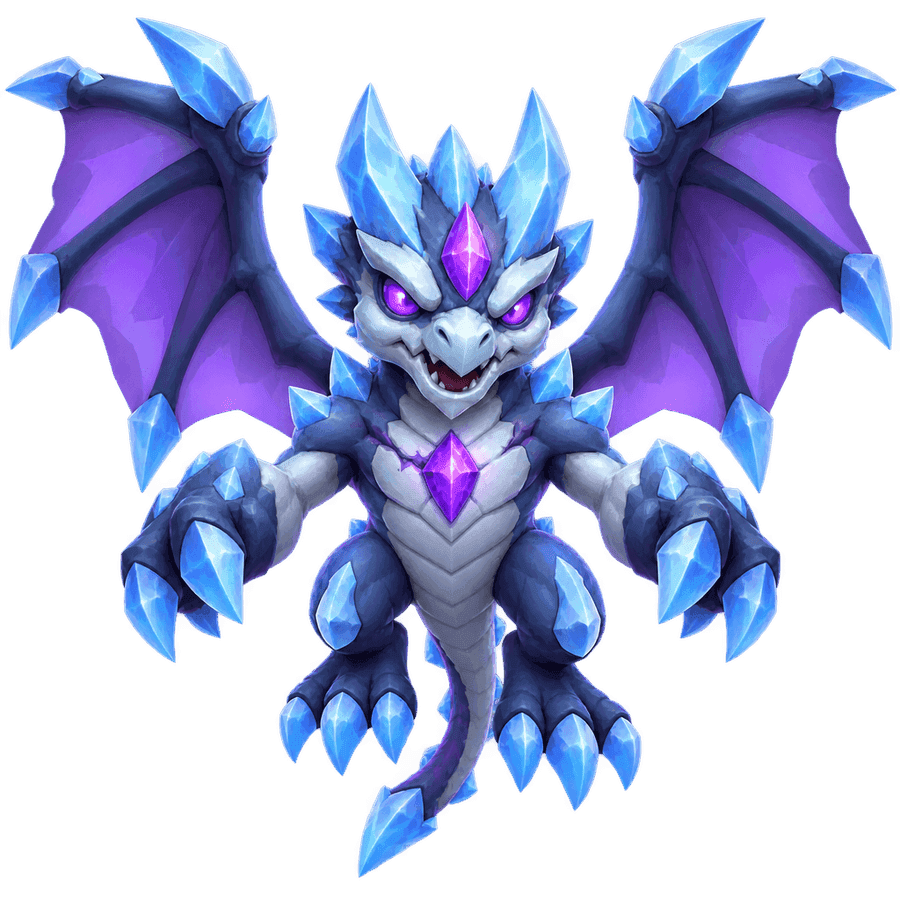
A small drakeling from the southwest, with icy spikes along its back.
The northeast
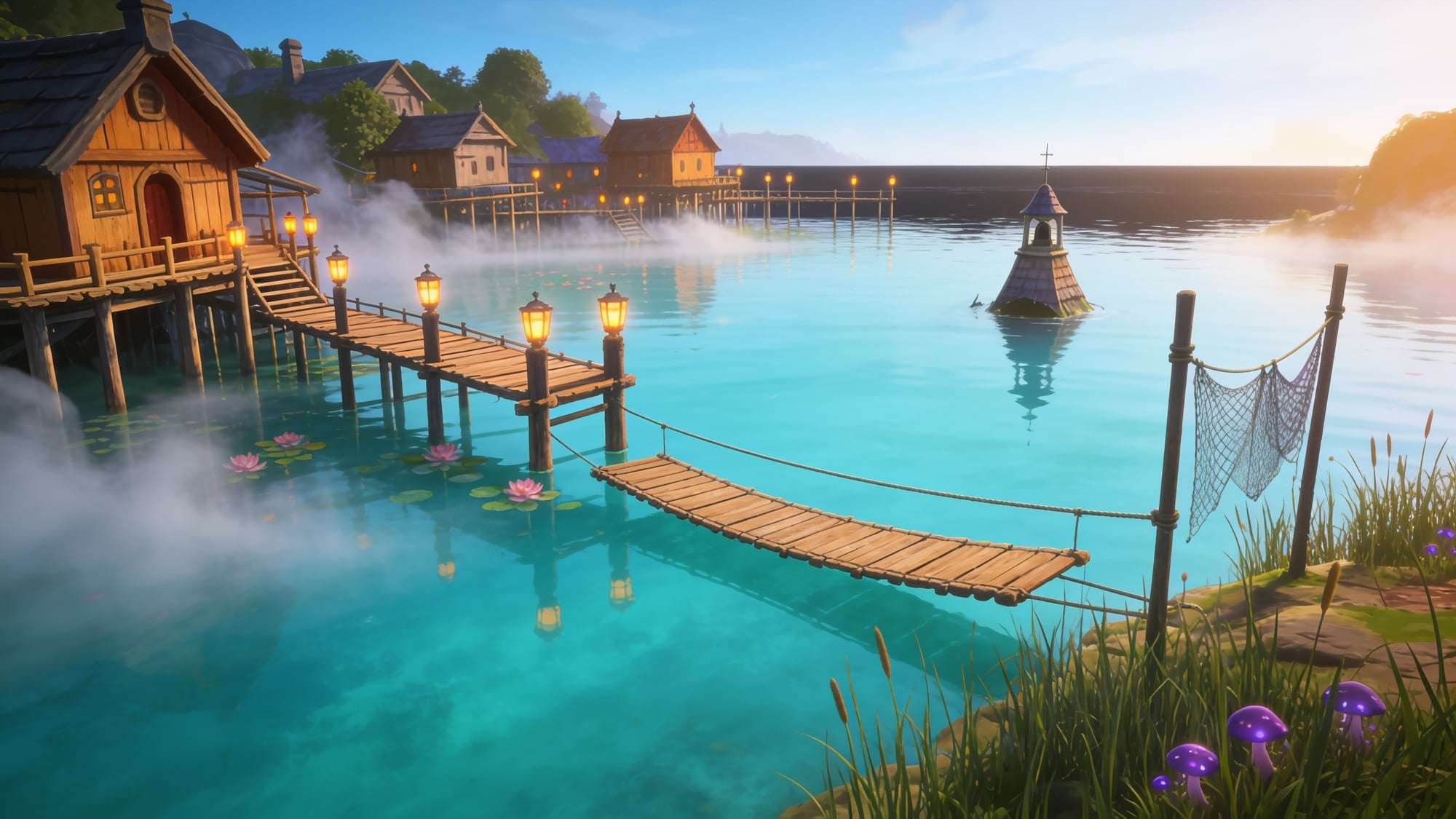
It's called Blackmere, the black lake, but by day its water is bright and turquoise. Only the depths are black.
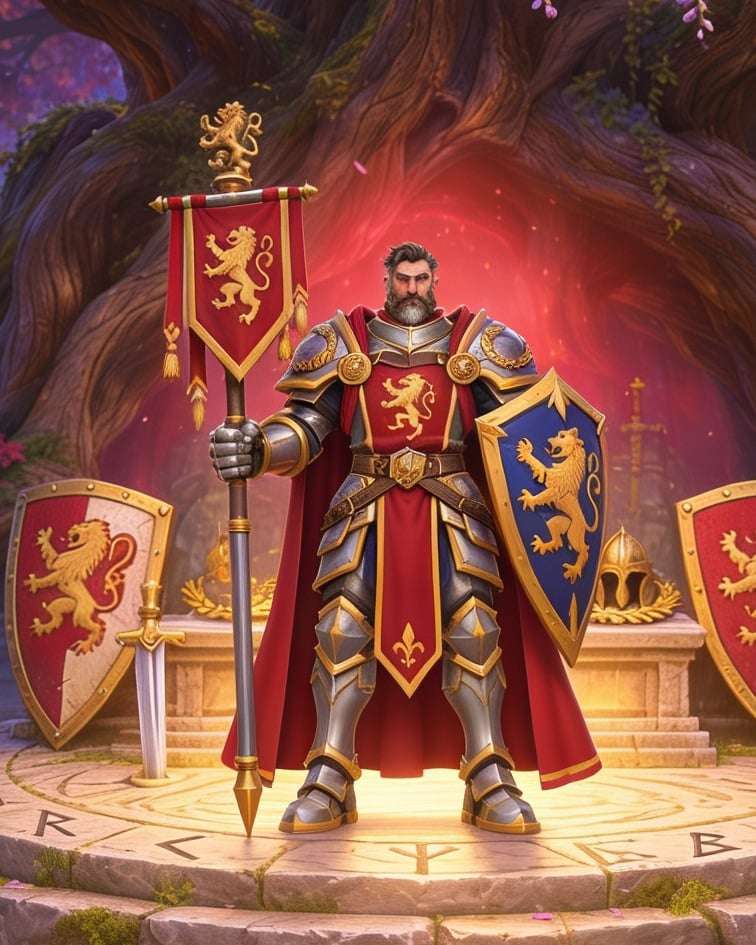
The morning after the first clonk, Aldric gathered all the heroes around his banner.
He stood bareheaded, helmet under his arm, and spoke the way he speaks when he counts his people: slowly, looking each of them in the eye.
“The first Aldric swore that the gates would stay quiet. Every marshal carries his name and his oath. I carry it too.”
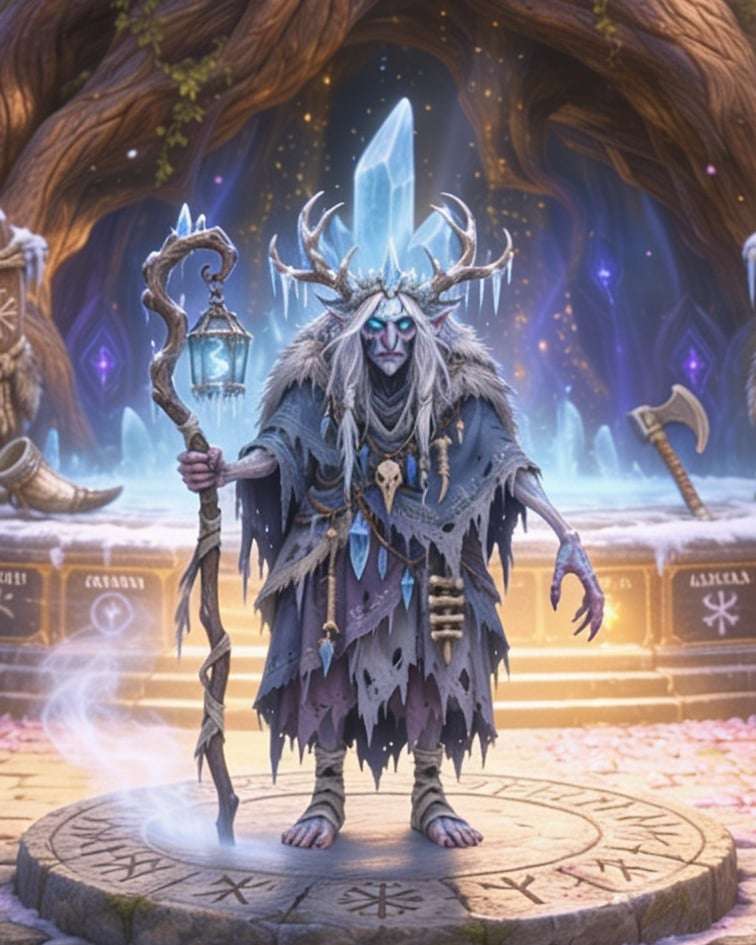
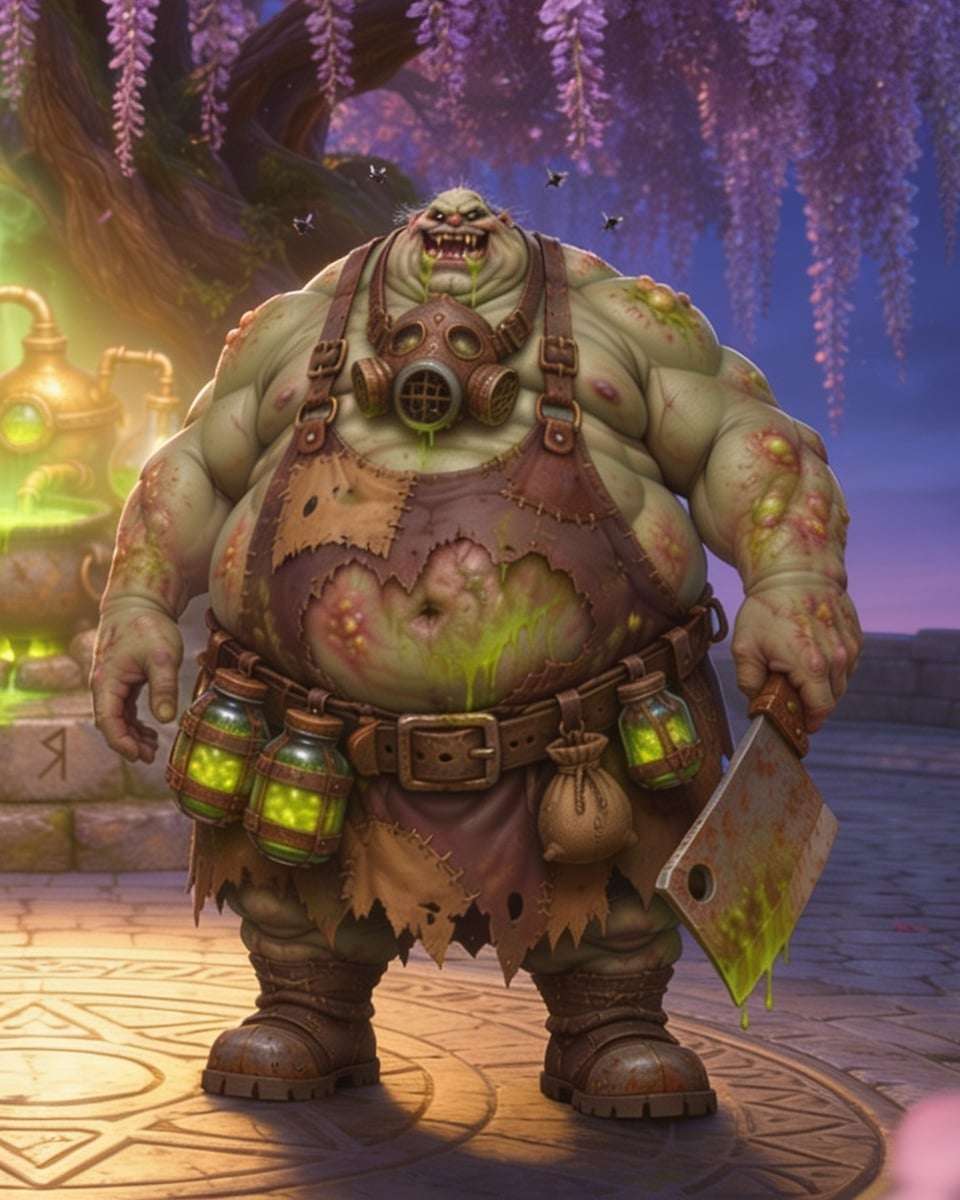
Hobb raised his hand. Hobb was the biggest of all the heroes, with a cleaver at his belt and a belly that glowed green under his shirt.
“Why quiet?”
Aldric thought about it. “I don’t know,” he said. “I got the oath along with the name. Nobody told me why.”
The old woman with the tea, Morwen, whom the Tree had given to Halvor, took a sip and looked Aldric up and down.
“Quiet gates,” she said. “And you won’t even put on a helmet.”
The next time the skulls started snoring, the Tree lowered a root beneath Aldric’s feet, and through it fell the three for whom that lake is home: Aldric, Hobb and Morwen. Morwen fell with a cup in her hand and didn’t spill a drop.
They came out on a wooden walkway that runs from the gate across the reeds to the village. It was narrow, with a rope railing, and it creaked under Hobb at every step. Behind them stood the northeast arch, the same as the one in the northwest: roots, a horned skull and a red wedge. Aldric stopped to count who had arrived, even though there were only three of them, until Morwen tugged him by the cloak.
“Come on, Marshal. We’re all here.”
It’s called Blackmere, the black lake, but by day its water is bright and turquoise. The sky shows in it. Only the depths are black.
In the mornings a warm white mist covers the lake, and the mist lifts as the day goes on. Water lilies with pink flowers grow between the stilts. On the shore, among the reeds, purple mushrooms glow, and the frogs call all day long, each in its own key.
The village of Stiltwater stands on stilts in the middle of the water. The houses are on stilts, the streets are wooden walkways from house to house, and nets hang under every walkway. There is a lantern on every post. The children don’t play on the ground, because there isn’t any. They play on the walkways and jump into the water from the roofs.
Out in the middle of the lake, away from the village, the roof of an old bell tower sticks out of the water. The rest of the tower is underwater. Every six seconds a dull clonk comes out of it, and a ring of ripples spreads across the water around the roof. It has been like that since that night. In the morning the fishermen counted, by noon they swore, and by evening they had stopped hearing it.
Morwen stood at the end of the walkway and listened for a long time.
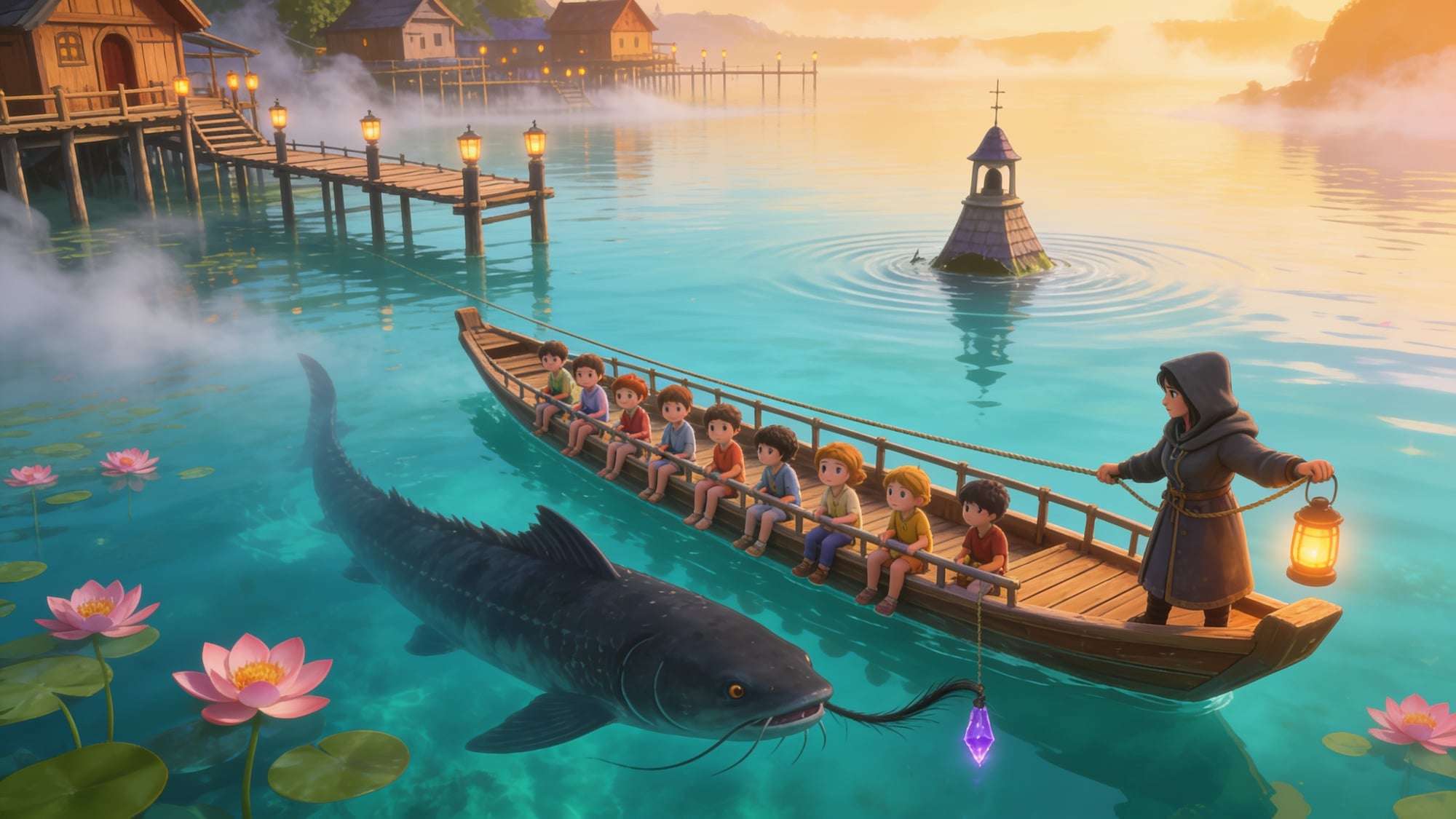
A ferry crosses the lake on a rope stretched tight from the pier to the far side. The ferry is run by Mora the Ferrywoman. The children of Stiltwater call her Nightmora, because she rows at night without a lantern and never misses the pier. Mora says the nickname is unfair, since she has never frightened anyone. The children say that’s exactly why it’s funny.
Mora has a ten-year-old daughter, and she doesn’t know her name.
She knows it’s her daughter. She knows her birthday, what she likes to eat and which tooth she’s missing. Not the name. The girl tells her every morning when they board. Mora repeats it. By the far shore she has forgotten it.
Aldric boarded the ferry and, as he does with everyone, asked the girl her name. She told him. Aldric repeated it, nodded and remembered it. Mora watched him from the stern.
“You know it now,” she said.
“I do.”
“Tell me.”
Aldric told her. Mora repeated the name twice and laughed. Halfway across the lake she had lost it. Aldric told her again. By the pier they had done it four times. The girl sat on the railing swinging her legs and said nothing.
Morwen met her at the pier and offered her tea. The girl asked whether Morwen knew her name.
“I don’t,” said Morwen. “But I know you take three spoons of honey, and your mother only gives you one.”
The girl drank her tea with three spoons of honey. Morwen said it would stay between the two of them.
At the end of the longest walkway sits Old Hook, the oldest fisherman in Stiltwater, placing orders for fish.
He doesn’t catch them himself. He orders them from other people. The lake has six fishing spots, a different fish at each, and Old Hook knows exactly which one he wants today, from which spot, and how big. Hobb brought him a fine carp. Old Hook looked at it and handed it back.
“This one’s from the wrong side of the reeds.”
Hobb went around to the other side of the reeds and brought back almost the same carp. Old Hook took it.
Old Hook has a rule: he never eats a fish he ordered. He sells it to a cook. The cook cooks it and serves it to Old Hook. That’s why Old Hook says he has never in his life eaten a fish he ordered, and it’s true.
Old Hook talked about Old Gulper. He’s a catfish, three hundred years old, and he lives deep down, under the bell tower. Nobody has ever seen all of him. Old Hook once saw a whisker, and hanging from the whisker was a violet shard, just like the ones the creatures of the Rifts carry. It glittered in the water and lured the fish. Old Hook said it’s the only catfish that goes fishing.
When a fish jumps somewhere on the lake, the fishermen know a shoal is passing under it, and everyone rows to the spot. Old Hook doesn’t row. He says the shoal always passes him first.
Vessa, Hobb’s governor, keeps her distillery out on the lake: a house on stilts full of copper pipes, kettles and vials, with green smoke coming out through the roof. The fishermen don’t fish downwind of her.
Hobb went in, ducked under a pipe, sat on a barrel and pulled up his shirt.
“I tasted the water from the lake. Since then my belly glows, and I dream of other people’s funerals.”
His belly glowed green, steadily, right through the shirt. Vessa held up a lantern, took a look, and blew the lantern out, because she no longer needed it.
“Whose funerals?”
“Don’t know. I don’t know anyone at them.”
Vessa wrote that down. Then she picked up an empty vial and looked at Hobb’s belly very seriously.
“Smells like progress, doesn’t it?”
Hobb pulled his shirt back down.
That evening Hobb built a fire on the main pier of Stiltwater and set up the biggest pot he could find in the village. He made soup from everything the fishermen brought in, including Old Hook’s carp, the one from the right side of the reeds. You could smell it across the whole lake, stronger than Vessa’s smoke. Everyone came: the fishermen, the children, Mora, Old Hook, even Vessa, wearing her mask, just in case. Hobb ladled out a bowl for each of them and watched them eat.
Old Hook had three bowls. He said you could tell right away the carp was from the right side of the reeds.

After the fifteenth wave, Morwen sat on the pier with Halvor, her governor. Halvor is big and slow, with a hammer across his knees that is always cold. He says little, and slowly. Morwen talks fast and sharp and offers everyone tea, Halvor included, even though he doesn’t drink it.
Morwen put down her cup and said, with none of the sharpness:
“For sixty years I’ve listened to something ringing under the ice. Something with no tongue.”
Halvor waited. Then he said what he always says:
“Halvor hears. Halvor waits.”
“You wait,” said Morwen. “I’ve waited sixty years. In winter, when the lake freezes, I lie down on the ice and listen. It’s dull, and it doesn’t ring when it should. It rings when it likes. Now it rings every six seconds, and it isn’t even winter.”
Halvor didn’t answer. He raised his hammer and struck the water beside the pier, and the water froze into a path of ice across the lake, straight towards the roof of the bell tower. Morwen looked at it, picked up her cup and said it wasn’t time yet.
At the next respite the mist didn’t lift. It grew thicker.
Out of the Muddy Marsh, from a crack in the reeds, the Rifts let creatures onto the walkway on stilts, heading for the Stiltwater pier. Out on the ferry, in the middle of the lake, were the village children, eleven of them, with Mora at the stern. The ferry had stopped on its rope. The creatures were heading for the ferry.
First came the peat machines, out of the mud: made of wood and iron, with saws instead of legs, and a violet crystal set where the boiler should be. Behind them came rats from the silt, lots of them. And in the mist there was something you couldn’t see. You could hear it. It wailed, from the water, from every side.
Aldric drove his banner into the middle of the pier.
“Raise the banner, champions!”
Around the banner the towers reached farther. Vessa’s towers, built on the old village stilts overgrown with roots, poured green smoke onto the walkway, and Halvor’s froze the rats where they stood. Aldric ran from post to post lighting lanterns. Each lantern lit a circle of mist, and in each circle the wailing things showed themselves: white, see-through, with a violet crystal in the chest. The moment a lantern revealed one, the towers knocked it down.
Hobb didn’t wait for lanterns. He walked into the mist, waist-deep in the water, cleaver in hand.
“Have a whiff of this!”
His cloud rose around him, green and heavy. Inside that cloud you could see everything that’s normally hidden, and the invisible ones stood in it, surprised, their crystals glowing. Hobb held three of them at once, and while he was holding them, he grabbed a fish out of the water and ate it.
Morwen stood at the end of the walkway with her cup.
“Freeze, little ones!”
A blizzard started. The peat machines slowed down, then stopped, then froze with their saws in the air. The towers knocked them down one by one. Morwen sipped her tea. The tea didn’t freeze.
Then dust rose on the shore, from the Marsh Den. A big rider on a wolf came charging down the walkway with a lance, straight at the pier and the banner. The dust ran ahead of him, and everyone knew where he would hit. Aldric stepped in front of the banner. The rider swerved off the walkway to get around him, and the wolf sank knee-deep in the mud and got stuck. Aldric walked up and hit him with his shield, once, and the rider fell off the wolf into the mud, and the towers did the rest.
“Stand fast! Strike true!”
When the last creature fell, the ferry started along its rope towards the pier. Aldric was waiting at the end. He counted the children by name as each one stepped off. There were eleven before and eleven after. Aldric said so out loud, twice.
The next day, people found the saw-legged peat machines in the peat shed, neatly lined up, each with a bandage over its boiler, tied in a bow.
That same respite, as the mist finally lifted, two drakelings appeared high in the sky from the southwest. They were small, the size of a dog, with icy spikes along their backs. They made one circle over the lake and went back the way they had come.
Old Hook dropped his rod in the water. He spent the rest of the day fishing for it and never caught it.
Nobody in Blackmere had seen a dragon in three hundred years. Not in any of the reaches. The fishermen knew them from songs, and in the songs the dragons were bigger.
“They’re small,” said Hobb.
“So was I, once,” said Morwen.
The next day the fishermen told the whole of Stiltwater, and nobody believed them.
In the evening, when the mist was gone entirely, Mora ferried Aldric, Hobb and Morwen across the lake. The lake was calm and smooth, and the ferry slid across the reflection of the sky.
Halfway across, something passed under the ferry.
It was dark and long, longer than the ferry, and it moved slowly. When it passed beneath the lantern at the stern, they saw a whisker, thick as the ferry’s rope, and on it a violet shard, glittering.
Mora didn’t stop pulling the rope. Her hands were steady.
“That’s him,” she said. “Sometimes he passes under the ferry. He’s three hundred years old.”
“And what does he want?” asked Hobb.
“Nothing. He waits.”
By the bell tower stood an old pier with four big lily pads around it. The roof of the tower stuck out of the water behind it. Clonk. A ring of ripples crossed the lily pads and reached the ferry.
Under the pier, out of the depths, one big bubble rose and burst on the surface, between the lilies.
That night, under the Tree, Selwyn went to the archivist the Tree had given her, Osric. He was sitting by the fire, writing, as he did every evening, in tiny letters, with footnotes.
“Master,” said Selwyn. “Your index has turned up in the Quorum.”
Osric lifted his pen.
“What index?”
Heroes whose home is Blackmere
Bestiary
Nothing here dies. Knocked down, they wake at home with a bandage.
A small drakeling from the southwest, with icy spikes along its back.

The drowned, walking in the lake fog.

The lake itself.
At the heart of Blackmere
A catfish, three hundred years old, who lives deep down, under the bell tower. His whisker is as thick as the ferry rope.
Read “Old Gulper”