



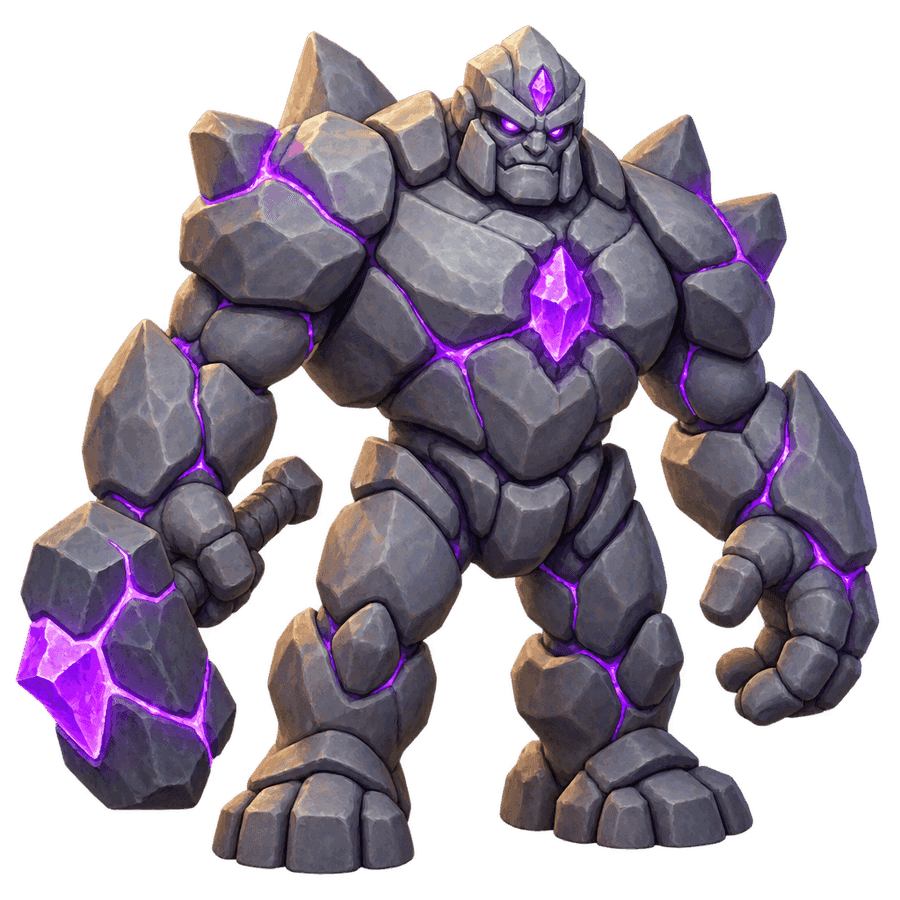
Granite Colossus
Living stone from the pass, heavy and slow.
The southwest
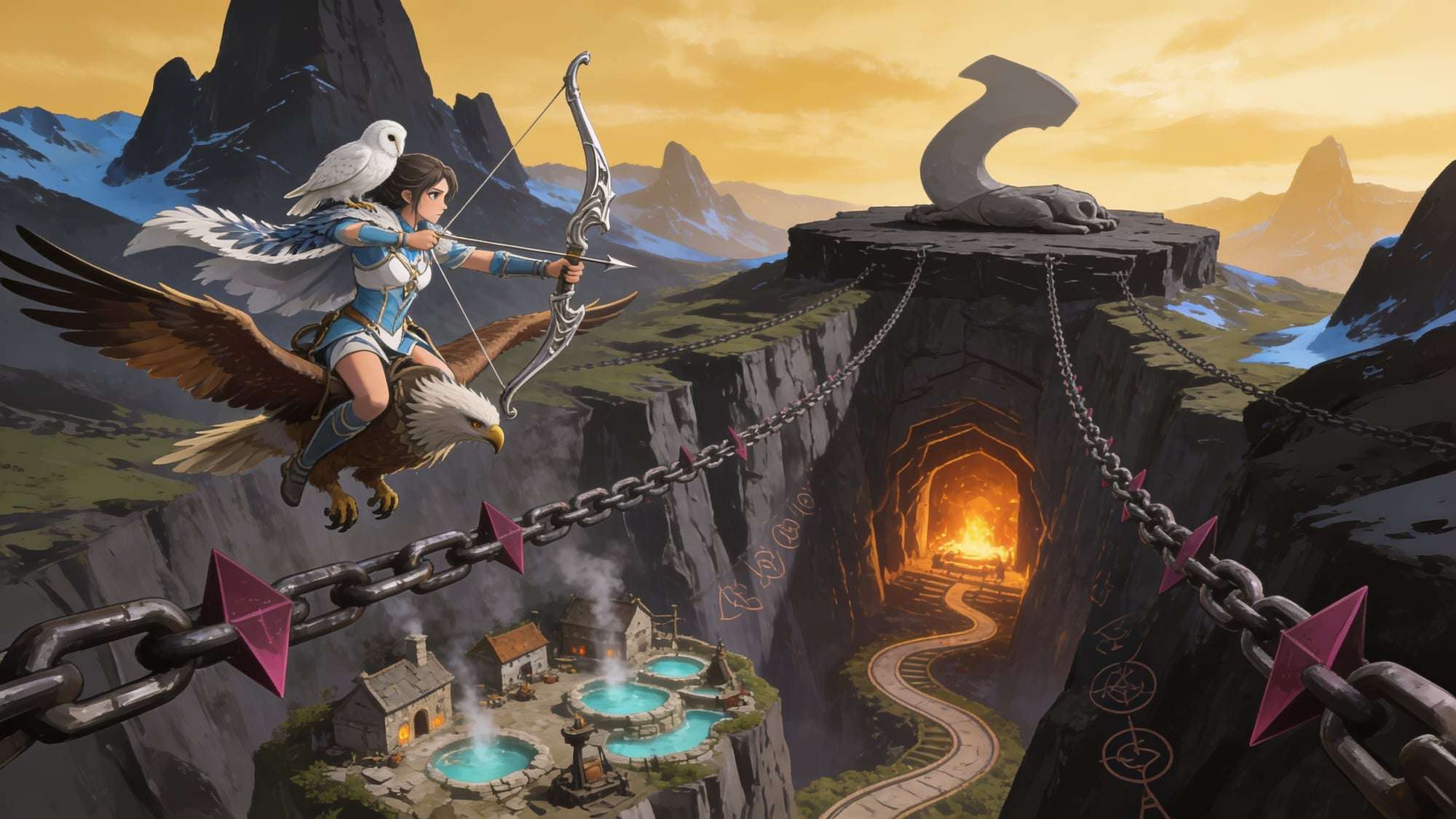
Forgeholm is a smithing village, clinging to the rock. Across the valley, from mountain to mountain, hang chains.
The next time the Tree lowered its root, four fell through, because the southwest has more heroes than any other reach.
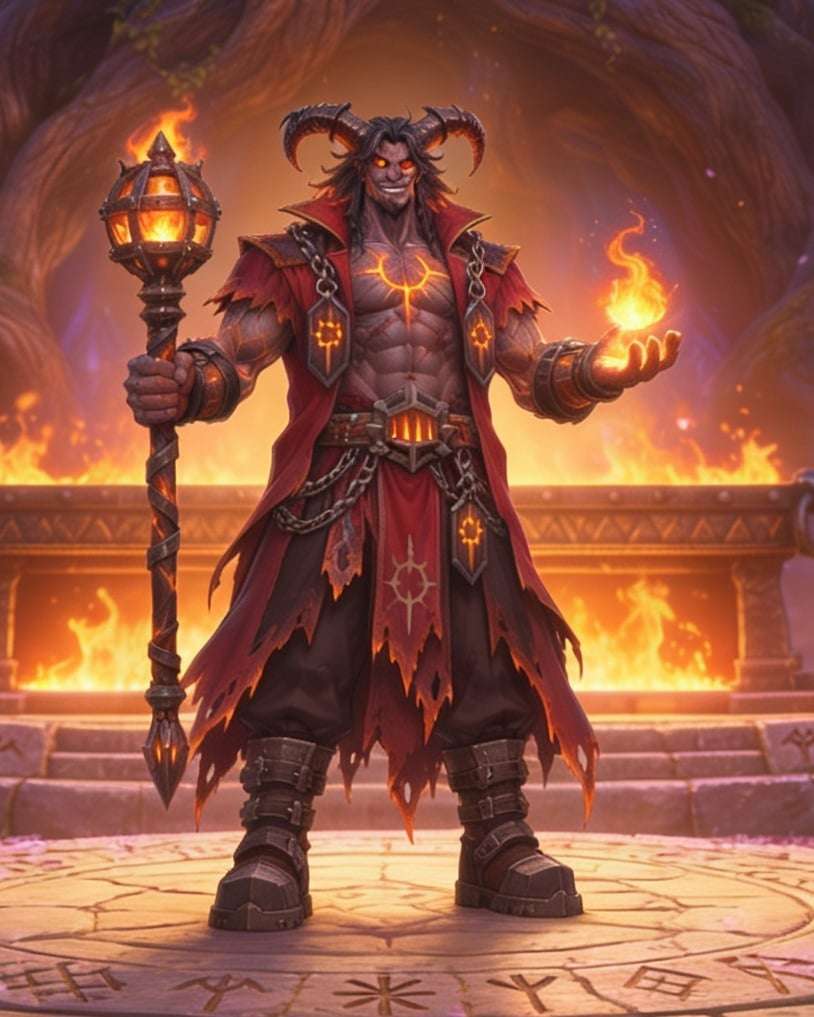
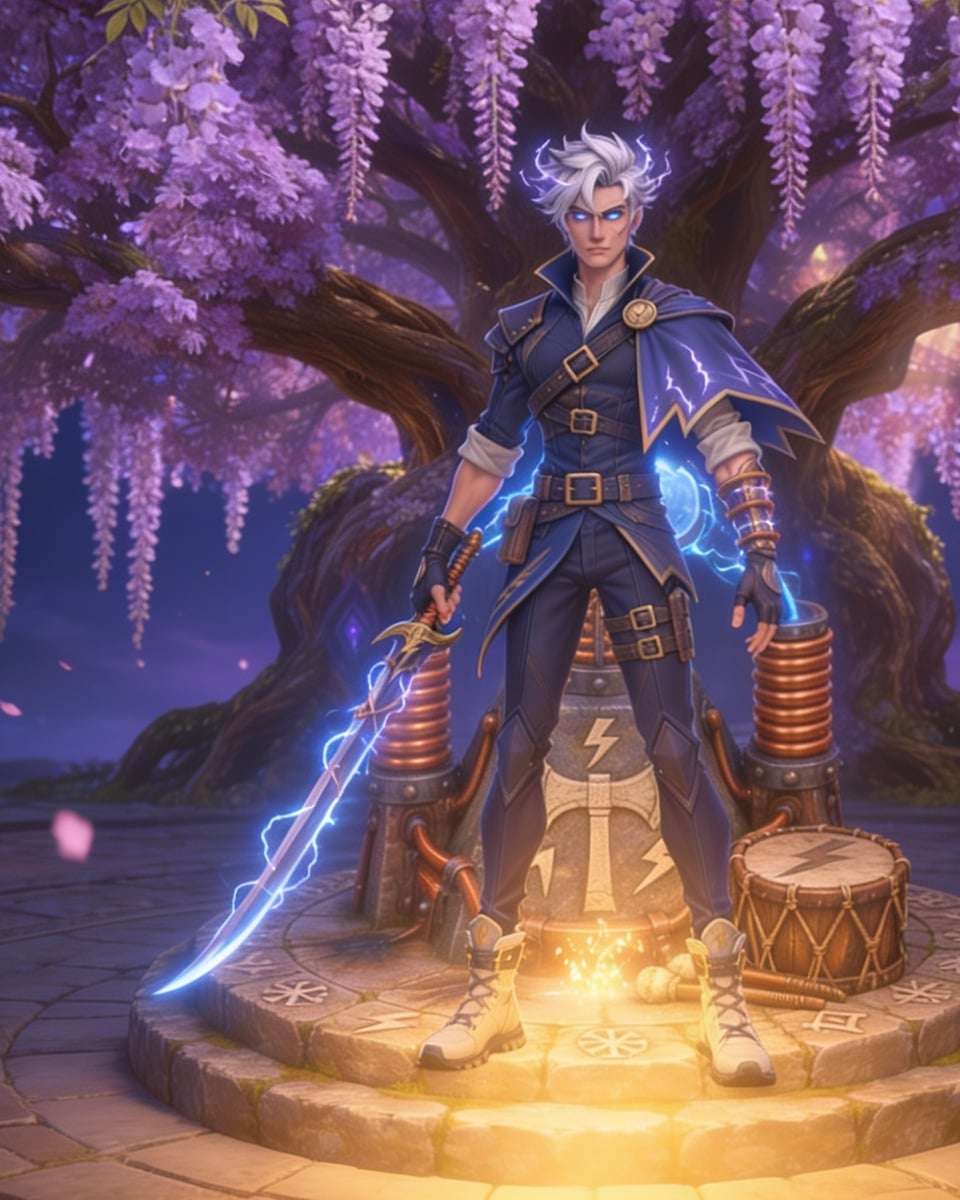
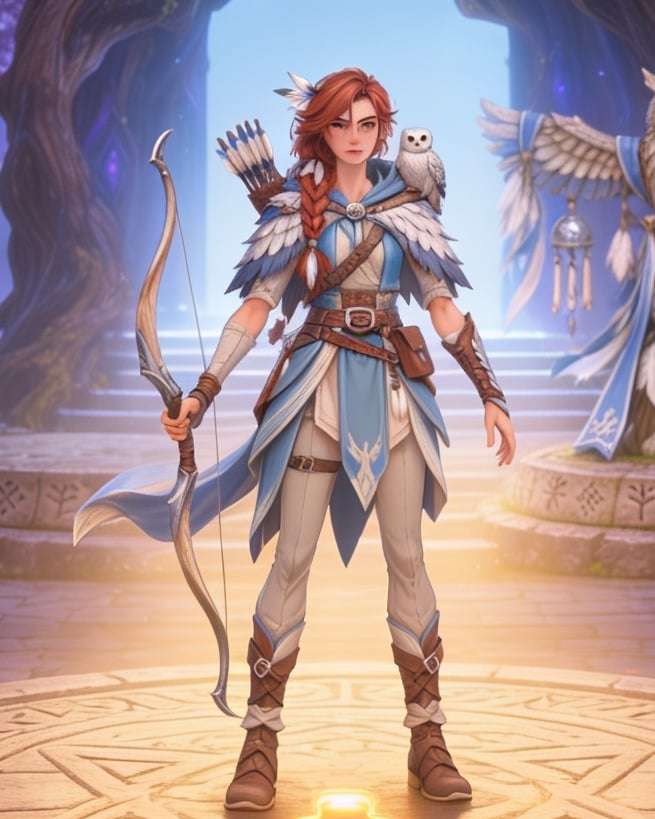
First came Kael, Ignara’s hero, with horns, orange eyes, and a book hanging from his belt on a chain. When people ask why the book is chained, he says it’s for safety, and doesn’t say whose. Bram fell after him, with a copper mask over his face and a curved blade on his back, blue sparks crackling along it. Bram said nothing. Bram doesn’t speak until lightning strikes. Third came Wren, the huntress, with a silver bow and a cloak of feathers, and a white owl on her shoulder. The owl landed first and waited for her at the bottom.
Last came Rivet Mk II, and you could hear it. Rivet is a machine, Quibble’s best invention, patched together from parts from all four lands, and on landing every one of those parts rattled at once.
They came out at the gate at the foot of the pass. It was the golden hour. The mountains were dark basalt with snow on the peaks, blue wherever the sun didn’t reach. Switchbacks climbed the mountain between the pines, high, up to the snow, and from above came the sound of an anvil. It struck in rhythm.
Forgeholm is a smithing village, clinging to the rock. The houses are stone with slate roofs, and smoke rises from every chimney. Below the village are the hot springs, turquoise terraces of steaming water, where the Forgeholm children wash the soot off their hands in winter. People fish the terraces too. The fishermen say the fish here come out already cooked.
Snow stays on the roofs, but under the roofs it’s warm, so the eaves drip all day long.
Above the village, inside the rock, is the forge. Its entrance is three stories high, and out of it pour orange light and a heat you can feel fifty paces away. Inside, along the wall, stand the anvils, one after another, a smith at each, and all of them strike in the same beat, because Torvald wants it that way. Not one smith in Forgeholm has eyebrows. Torvald doesn’t have a mustache either.
Beside the forge stands Quibble’s machine. Nobody knows what it does. Colored smoke comes out of it, and sometimes sparks. Torvald says the machine steals the draft from his forge. Quibble says that’s impossible, and only turns the machine towards the forge when Torvald isn’t around.
Across the valley, from mountain to mountain, hang chains. They are thick, each link bigger than a man, and they run over the switchbacks, high up, all the way to the top of the pass. In every link sits a red wedge, the same as the ones in the stone arches of the Rifts.
Wren stopped in the road and looked at the chains until her owl pecked her ear.
Torvald the Smith is the master smith of Forgeholm. He’s broad, in a leather apron burnt at the edges, and his arms are black to the elbows. He was standing at his anvil, hammering, and he didn’t stop when Kael came in.
“You again,” he said.
Kael had been Torvald’s apprentice. Torvald threw him out of the forge for one reason: Kael’s fire won’t go into the mould.
Kael showed him. He opened his palm, and a flame was burning in it. He lowered it into an iron horseshoe mould. The flame settled into the mould, waited, then climbed up the side and sat on the rim, facing Kael, and burned from there.
Torvald sighed. Kael laughed. Kael always laughs when something catches fire.
Later that evening Ignara, Kael’s governor, came down to the forge. Ignara’s hair is on fire. Not figuratively: it burns, with real flames, and she knows it.
“My hair is literally on fire. Hurry.”
She sat down next to Kael on a cold hearth and asked him what she had been meaning to ask him since the Council.
“Torvald threw you out because your fire won’t go into the mould?”
“It won’t,” said Kael. “Feels like someone forced it to, once before.”
Kael closed his hand.
Bram guards the pass. He inherited the guardian’s oath from whoever guarded the pass before him, who inherited it from the one before that. Bram keeps the oath. He doesn’t know what he’s guarding the pass against.
His governor is Durgan of the Storm, who is everything Bram is not: loud, cheerful, with hair that stands straight up from the lightning. On Storm Peak, above Forgeholm, stand three lightning rods, and Durgan took Bram up to them. Bram stepped onto the first. Lightning struck the rod and went right through Bram. Bram didn’t move. He stepped onto the second, then the third.
“Ha! The sky’s crackling today!”
Durgan did the talking for both of them. He talked about the storm, about the oath, about Bram’s father and his own grandfather. Then he stopped, for the first time that day, and said:
“The oath says: guard the pass. It doesn’t say against what.”
Bram didn’t answer. Nothing could be seen behind the copper mask. Lightning flashed over Storm Peak, and Bram said only:
“The storm is quiet. For now.”
Just then Wren came over the top from the other side, out of breath, her owl clinging to her cloak. She said she had got there first. Bram hadn’t known they were racing. Durgan said they had been, and that Wren had won, because Bram had been standing on lightning rods instead of running. Wren wrote it down in the notebook where she keeps everyone she has ever beaten. It was Bram’s first time in it.
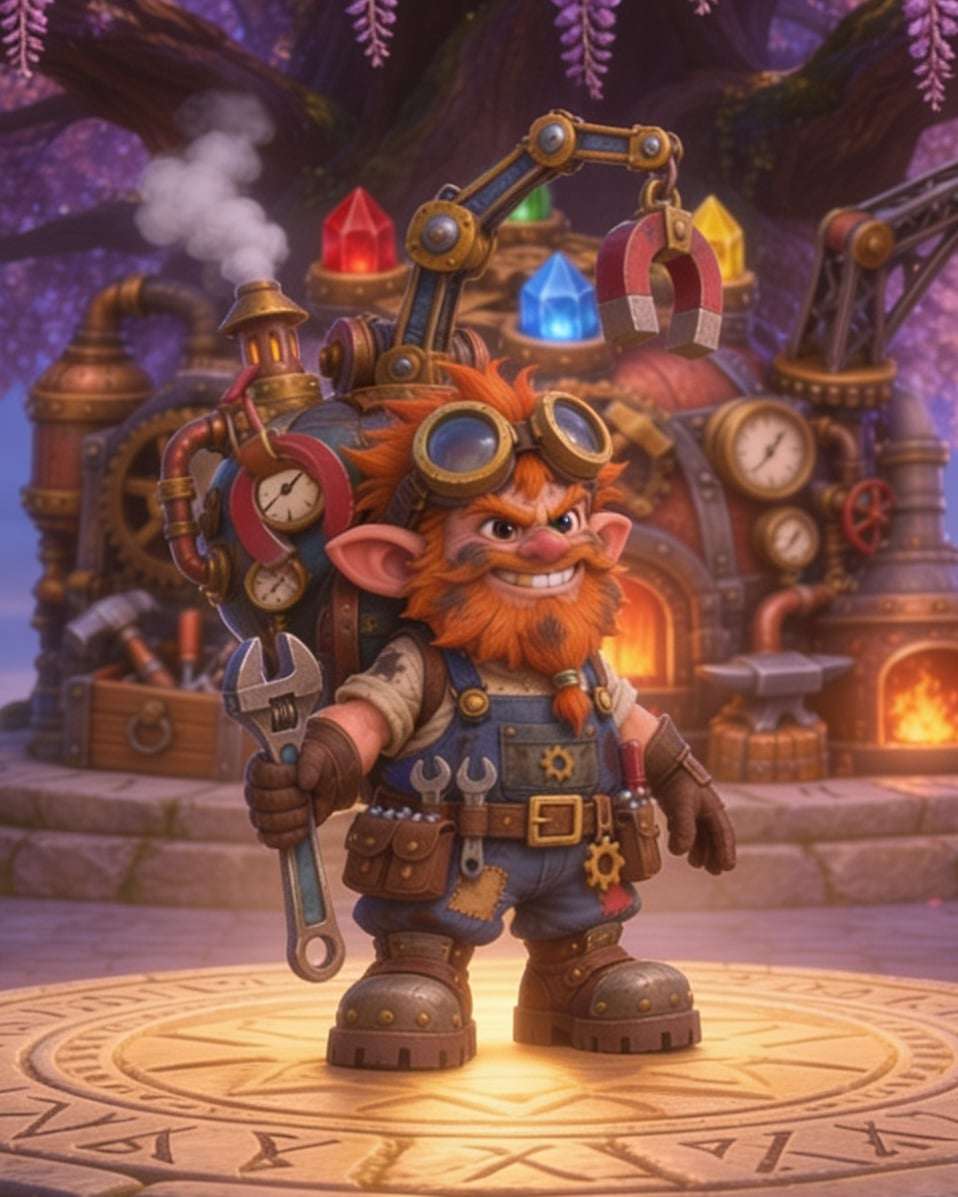
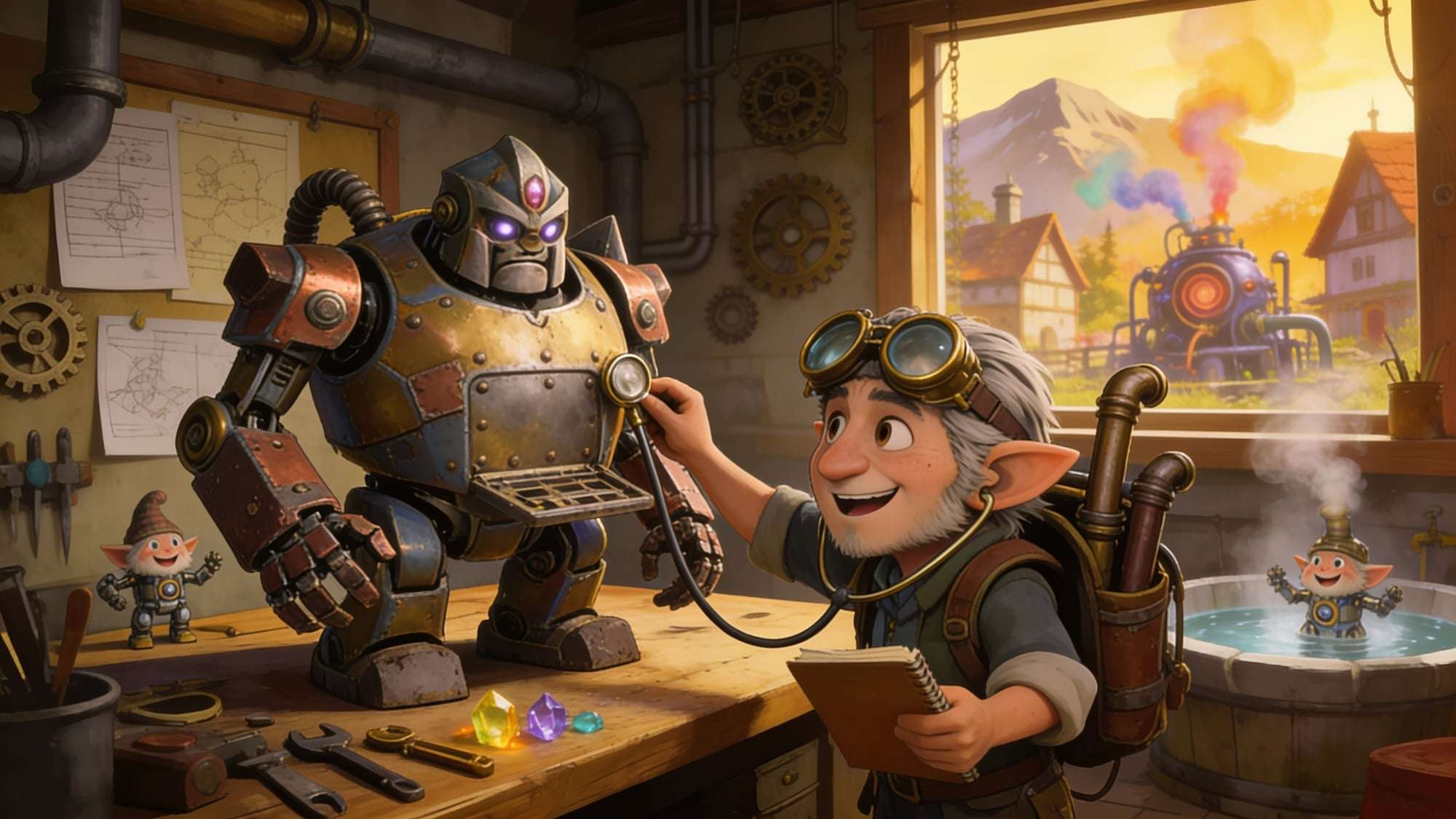
Quibble’s workshop is under the machine and all around it. Quibble is small, in a leather coat full of pockets, with goggles on his forehead and a tool in every pocket. His prototypes walk around the workshop after him. Nobody switched them on. They just walk.
One of them, steam-powered, had wandered into a hot spring and was standing in it up to its knees, puffing happily. Another followed Rivet around all day, copying every step.
Rivet sat down on a workbench and opened the hatch on its chest. Quibble came over with a stethoscope.
“I built you from parts of the four lands,” said Quibble. “Best invention I ever made.”
“Why does every part tick differently?” asked Rivet.
Quibble put the stethoscope to Rivet’s shoulder. Then to the knee, then the arm, then the chest. The shoulder ticked slowly, the knee fast, the arm ticked twice and then stopped, and the chest ticked whenever it felt like it. Four different ticks, no two alike.
Quibble’s eyes lit up behind his goggles.
“Ooh, is that a problem? I love problems!”
He wrote all four ticks down in his notebook, with the date. He didn’t know the answer.
Wren hunts dragons above the forge. She has hunted them for as long as she can remember, even though nobody has seen a dragon in three hundred years. She’s proud, she competes with everyone, with Bram at running, with Kael at aiming, with Durgan at who’s louder, and the only one she listens to is her owl.
Lyssa of the Wind, Wren’s governor, keeps a griffon. The griffon eats fish from the hot springs, and only the fish Wren gives it. Lyssa says that’s because the griffon has taste. Wren says it’s because she’s better.
Nobody in Forgeholm ever laughed at Wren, but every year they asked her whether she’d seen a dragon yet. Every year she said: not yet.
Lyssa let her take the griffon for one flight. Wren fed it a fish from the hottest terrace, climbed on, and the griffon flew up the mountain, above the chains, higher than Wren had ever climbed on foot. From up there she could see the whole pass. On the very top, on a plateau of black stone, lay something big and grey, and it didn’t move. The griffon wouldn’t go any closer. It turned back on its own, and Wren didn’t make it go on.
She told nobody what she had seen. That night she sat a long time with her owl, looking up.
Torvald wanted to fire the forge all the way up to the vault, for a big job. That takes the bellows: coal from the mines, water from the hot springs for steam, and wind. Durgan brought the wind. He stood by the bellows, raised his arms, and his hair stood up even higher.
“Thunder’s my drum. What’s the rhythm?”
“Mine,” said Torvald, and struck the anvil. Durgan blew in time.
While they were working the bellows, the Rifts struck.
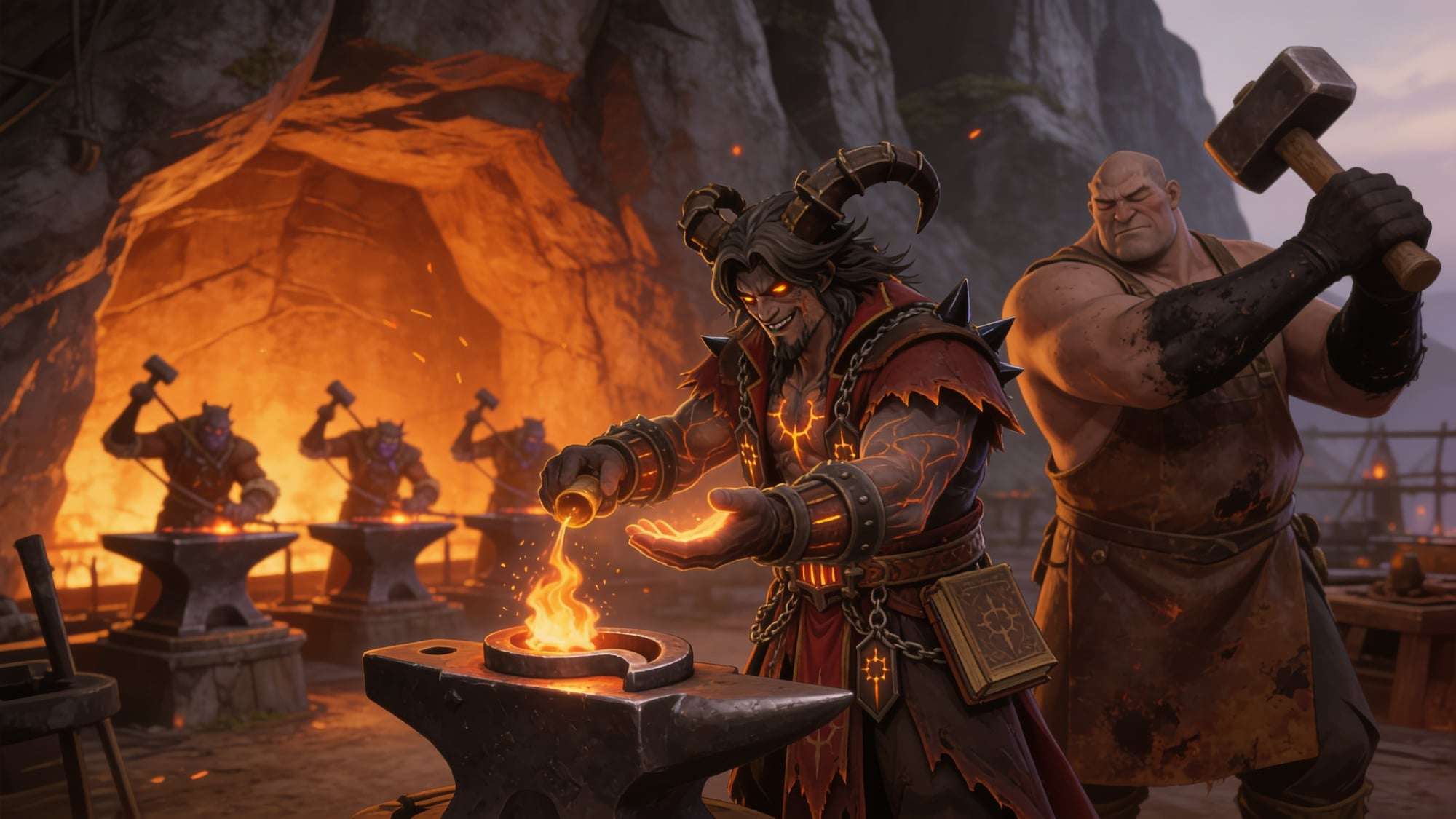
A crack opened by the Summoners’ Circle, above the village, where the cult gathers. Down two switchbacks through Forgeholm they came, heading for the bellows: rune-smiths in robes, summoners in horned masks, and men of stone, heavy and slow, whom magic couldn’t touch. Above them, down from Storm Peak, came raptors, big and fast, with violet crystals in their feathers.
The owl pecked Wren’s ear. Wren whirled her bola, a silver cord with two feathered weights.
“From the clouds!”
The bola wrapped a raptor in midair and dragged it down to the ground, into the towers’ range. Here the towers grew on the village’s cold hearths. Whenever a tower rose, the hearth beneath it caught, and Forgeholm got warmer and warmer.
Kael turned two towers into fire towers. With every spell the heat built up around him, and when it was full, Kael waited for the summoners to come closer, and only then let it go.
“Burn bright, burn brief!”
Bram leapt along the road with a thunderstep, in a single flash, and planted himself in front of the fastest.
“One flash, one fall!”
It was the first thing he had said that day. He stripped the shield off the stone men and the fury off the summoners, and the towers knocked them down. Rivet threw mines made of scrap, and with a magnetic hook dragged anyone who reached the bellows back onto the road. The towers around Rivet fired faster, and Rivet hit with whatever the last tower it had built hit with.
All this time Torvald never stopped hammering. One summoner made it to the forge door; Durgan blew him back down the switchback with a gust, and Torvald didn’t even look up.
When the last summoner fell, the bellows breathed. The fire in the forge roared up to the vault. Torvald struck the anvil, once, twice, and the anvil was ringing in rhythm again.
The next day the cult held a meeting in the Circle. Every one of them came with a bandage over the horned mask, tied in a bow, and nobody wanted to speak first.
At the next respite they went up, along the chains, to the top of the pass.
The road ran beside the chains, over the switchbacks. Wren went first. Her owl sat quietly on her shoulder.
From Storm Peak you could see everything: the chains over the switchbacks, the forge with its column of smoke, Forgeholm in steam, and the golden peaks in the sunset. Durgan stood by his lightning rods and, for the first time since Bram had known him, said nothing.
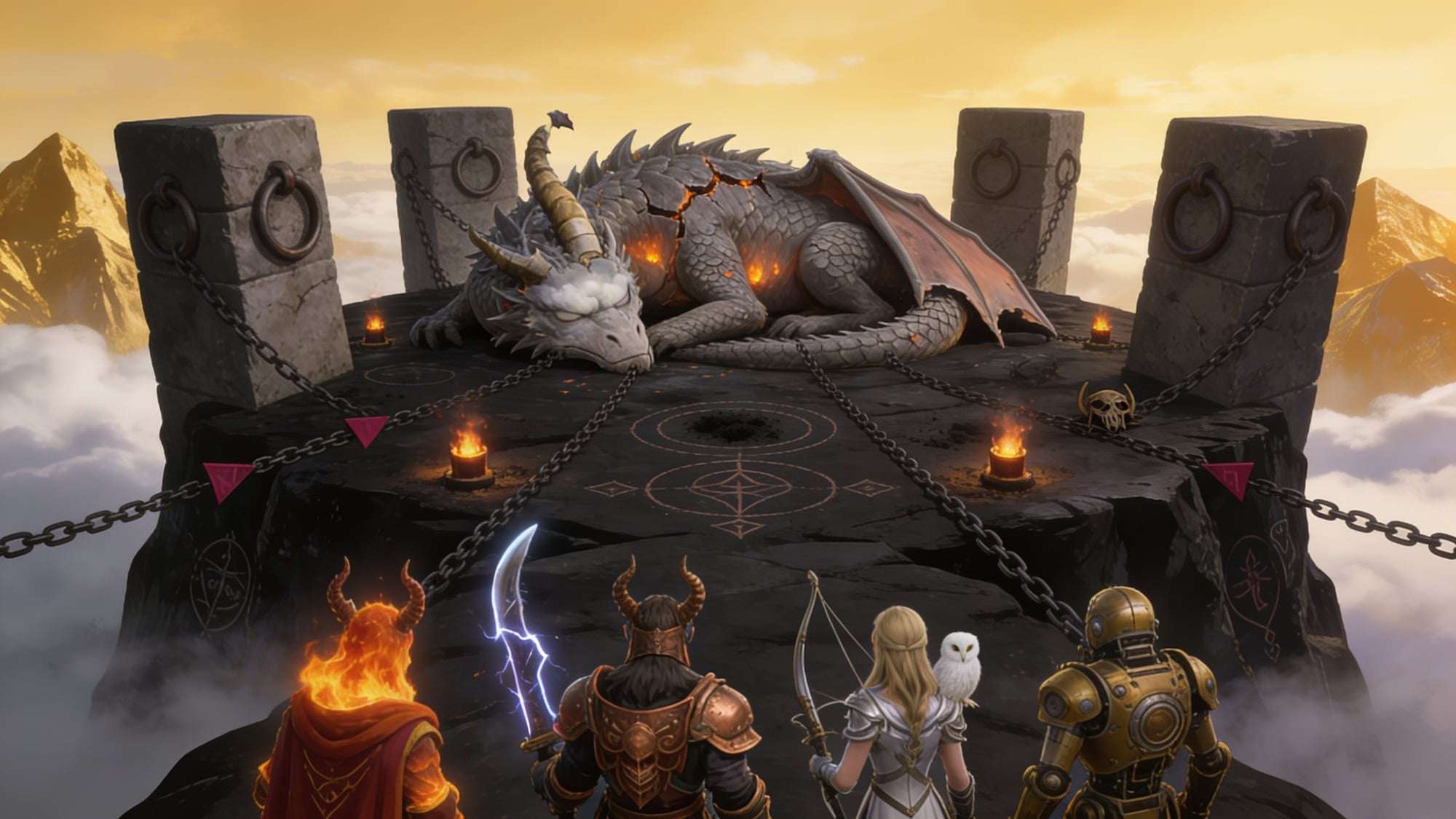
On the very top of the pass, on a plateau of black stone, she lay.
She was a dragon, old and heavy. Her scales were ash-grey, and in the cracks between them a dull orange glow burned low. One horn was broken. Her wings were torn and folded against her body. Her eyes were milky.
From her body, in every direction, ran chains, to four anchors driven into the rock, and on, across the valley. On every link sat a red wedge.
In the old songs of Forgeholm she is called Mother Cinder.
Around her, on the stone, were traces of the cult: circles drawn in soot, burnt-out torches, and one horned mask, left behind in a hurry. The summoners had been up here before them, and they had wanted what she had: her fire.
Mother Cinder was breathing. When she breathed in, the chains rattled and the glow in the cracks came up. When she breathed out, it sank again.
Bram stepped in front of everyone, his hand on his blade.
Wren had waited her whole life to see a dragon. She had never imagined it like this. She lowered her bow.
“Nobody has seen a dragon in three hundred years,” she said. “And this one sits in chains.”
She looked down the line of the chains.
“Where are the others?”
Nobody answered her.
That night all twelve heroes sat around the same fire beneath the Tree.
Garrick cleaned his rifle. Rowan said nothing. Morwen poured tea, and Hobb cooked. Aldric counted, got twelve, and was satisfied. Osric wrote, with the Index lying in his lap. Varic held his banner, and Bellamy sang softly. Kael watched the fire, Bram the mountains, Wren the sky, and Rivet ticked from four directions. The little prototype that had followed it around sat beside it.
Above them, the Tree let go of a petal. It was purple, with a brown edge.
The Tree asked each of them who they were, as it did every evening, and each of them said their name.
Then it asked you.
“Who are you, dear?”
Bestiary
Nothing here dies. Knocked down, they wake at home with a bandage.
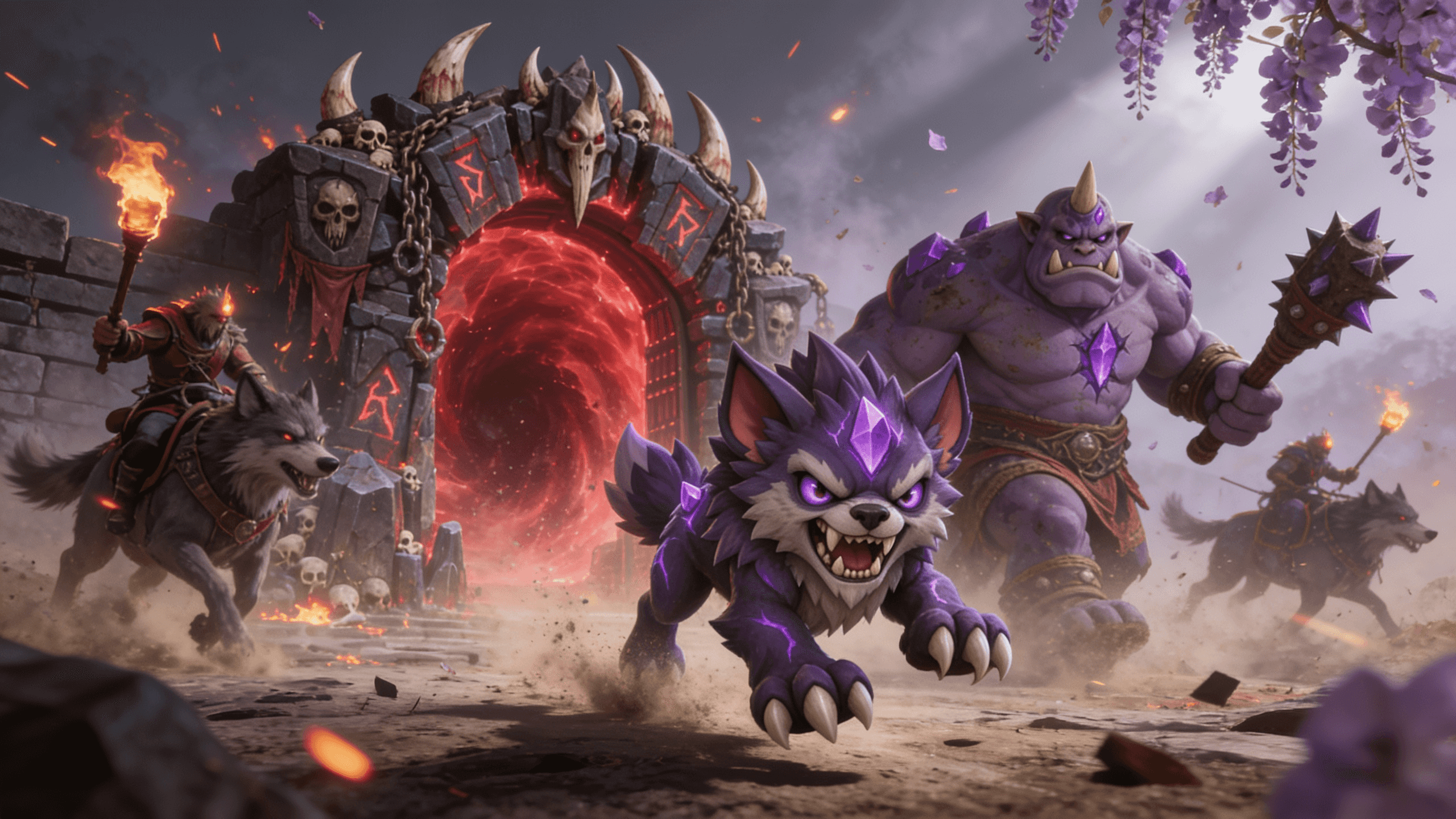
Living stone from the pass, heavy and slow.
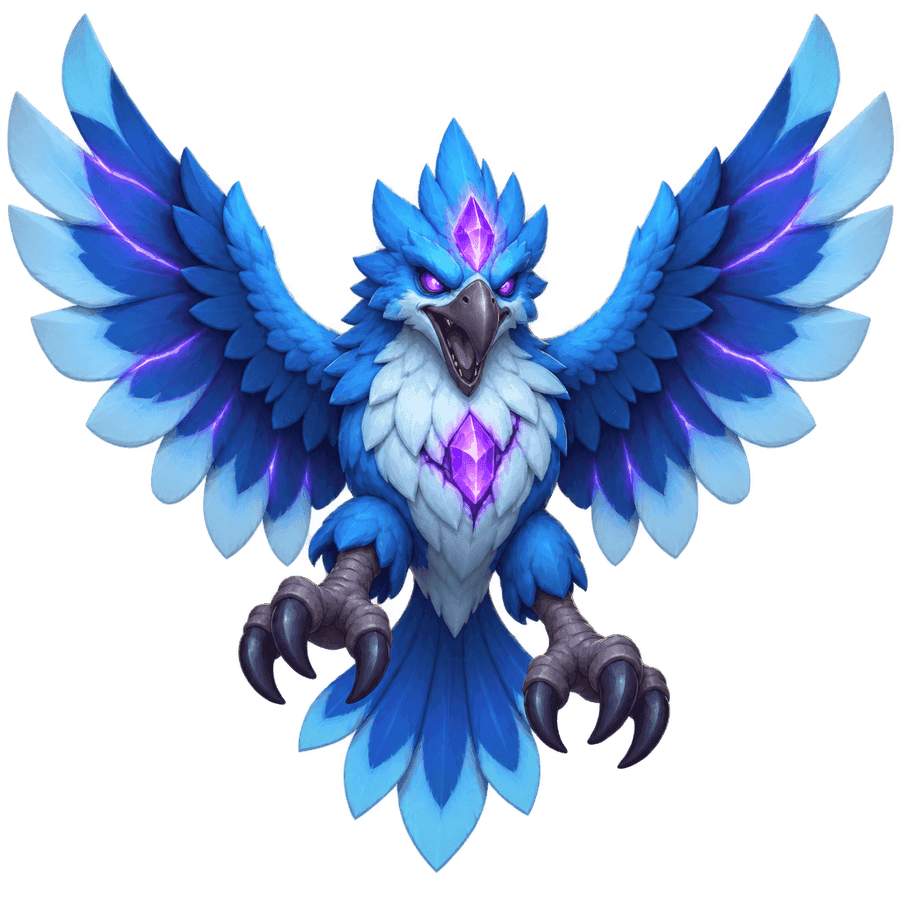
Down from Storm Peak.
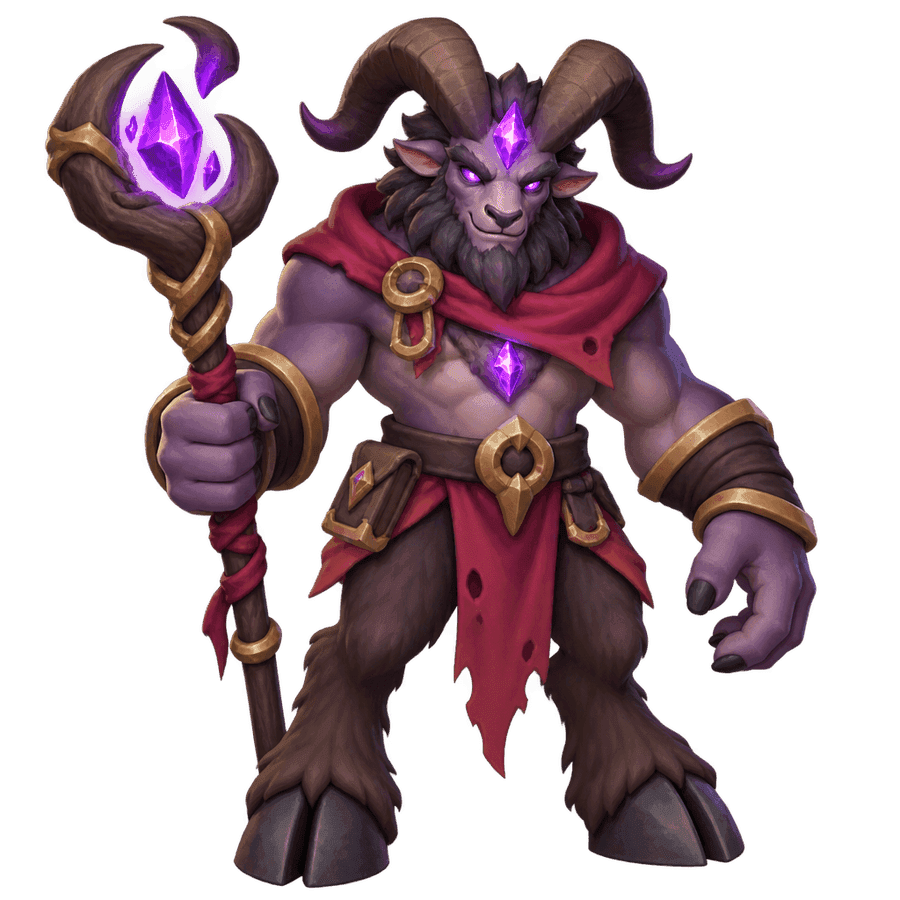
A summoner in a horned mask, from the Summoners' Circle.
At the heart of Emberpass
On the top of the pass, on a plateau of black stone, lies an old dragon in chains. In the old songs of Forgeholm she is called Mother Cinder.
Read “The Chains”